Sample identity
Record construction, treatment, basis weight, width and the decision supported.
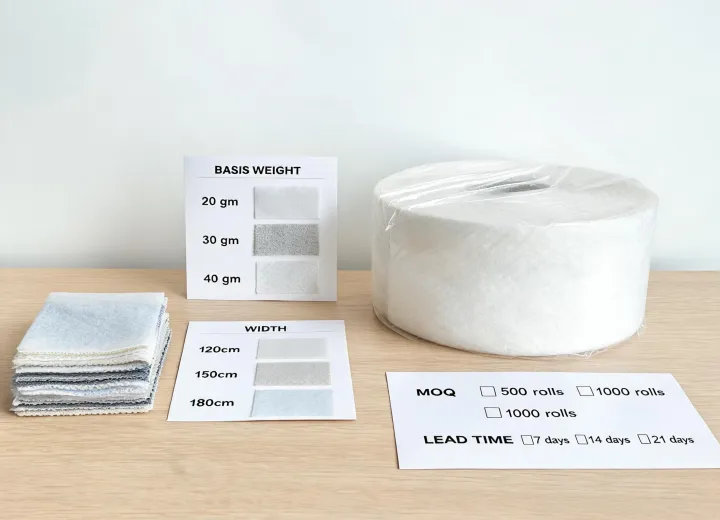
Align specification, sample, MOQ, lead time and roll-delivery information before comparing offers across global sourcing programs.
| Input group | Required information | Why it matters |
|---|---|---|
| Application | Finished product, layer role, adjacent materials, fluid or particle challenge, user contact. | Defines the functional method and system boundary. |
| Construction | Polymer, spunbond/meltblown/SMS or specified web, layers, nominal basis weight and tolerance. | Prevents dissimilar webs from being compared as equivalents. |
| Roll and conversion | Usable width, roll diameter, core, winding, splice rule, unwind direction, bond and line window. | Connects material selection to converting stability and waste. |
| Evidence | Barrier, absorption, filtration, tensile, linting or other method, conditions and pass level. | Creates a comparable acceptance basis. |
| Commercial | Sample quantity, production quantity, MOQ by construction, target date, incoterm and destination. | Separates material feasibility from delivery planning. |
Record construction, treatment, basis weight, width and the decision supported.
Capture line settings, unwind, slitting, bonding, sealing and observed defects.
Identify specimen, conditioning, repetitions, unit, aging and acceptance criterion.
Reconcile roll labels, inspection, reports, deviations and change triggers.
MOQ and lead time can depend on polymer, web route, treatment, basis weight, width and available line campaign. Confirm whether each quoted value applies per construction, treatment or order.
Price comparisons use the same unit, usable width, basis weight tolerance, roll build, packaging, test responsibility, currency and incoterm. A lower area price can be offset by conversion waste, unstable unwind, splices or inconsistent width.
Lead time is separated into material availability, treatment development, roll trial, testing, bulk campaign and transit. Changes after approval are recorded with their effect on sampling, testing and delivery. Each quotation identifies assumptions and the next decision owner.
Unknown fields can remain open when clearly marked as selection questions.
Start Sourcing Inquiry