Fluid management
Screen topsheet, acquisition, distribution or absorbent-support materials by strike-through, rewet, capacity, softness and interface behavior.
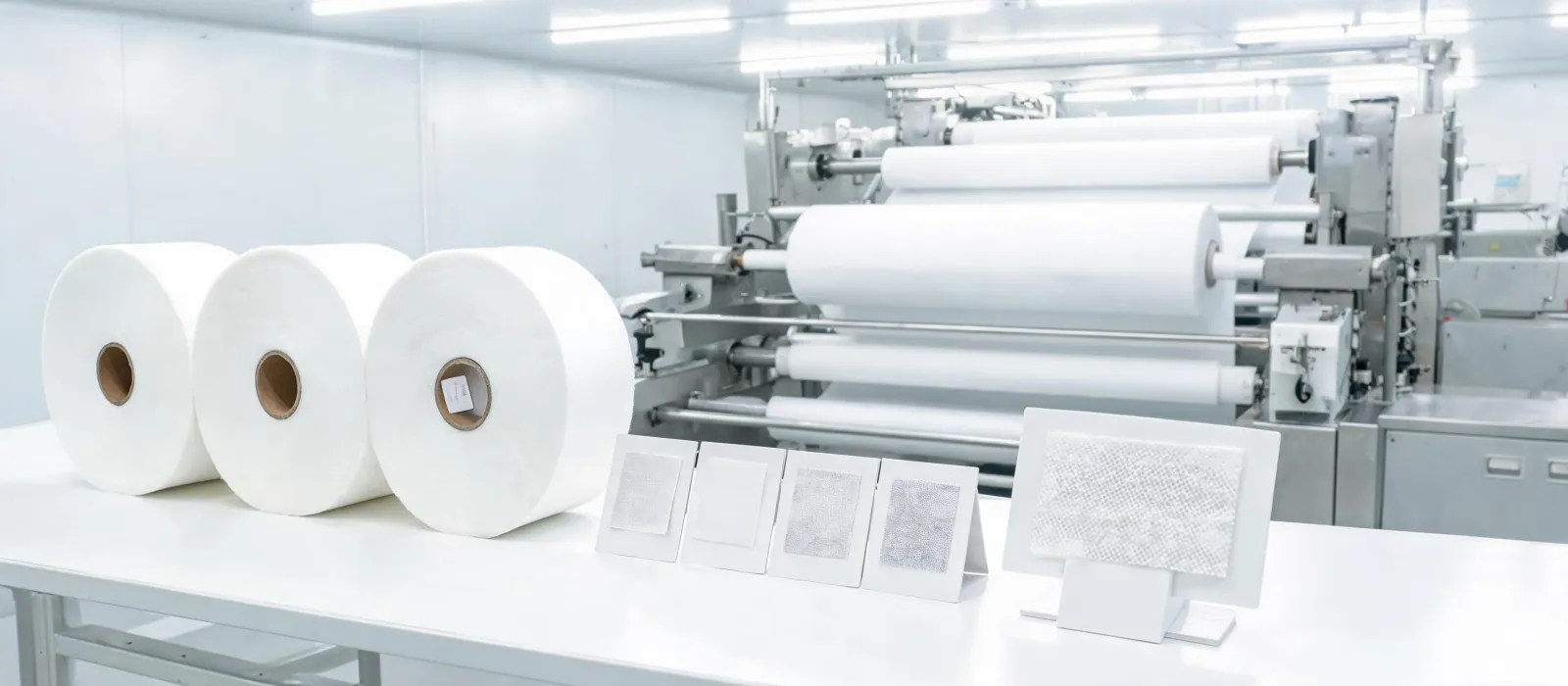
Define polymer, web formation, layer sequence, basis weight, usable width, surface treatment, barrier or absorption method, roll build and the converting window before sampling advances.
Review Nonwoven StructuresScreen topsheet, acquisition, distribution or absorbent-support materials by strike-through, rewet, capacity, softness and interface behavior.
Review basis weight, pore structure, hydrostatic pressure, breathability, seam or bond route and aged performance under the named method.
Define particle or liquid challenge, pressure drop, efficiency method, loading, durability and the finished-system boundary.
Reports and compliance documents must identify the issuing source, covered entity, construction, lot, method, date and limitation. A medical or hygiene application does not make every nonwoven a regulated finished device, and one laboratory specimen cannot establish all basis weights, colors or treatment levels.
Send layer function, basis-weight tolerance, test method, bond or seal conditions, roll format, line speed range, quantity and delivery timing.